

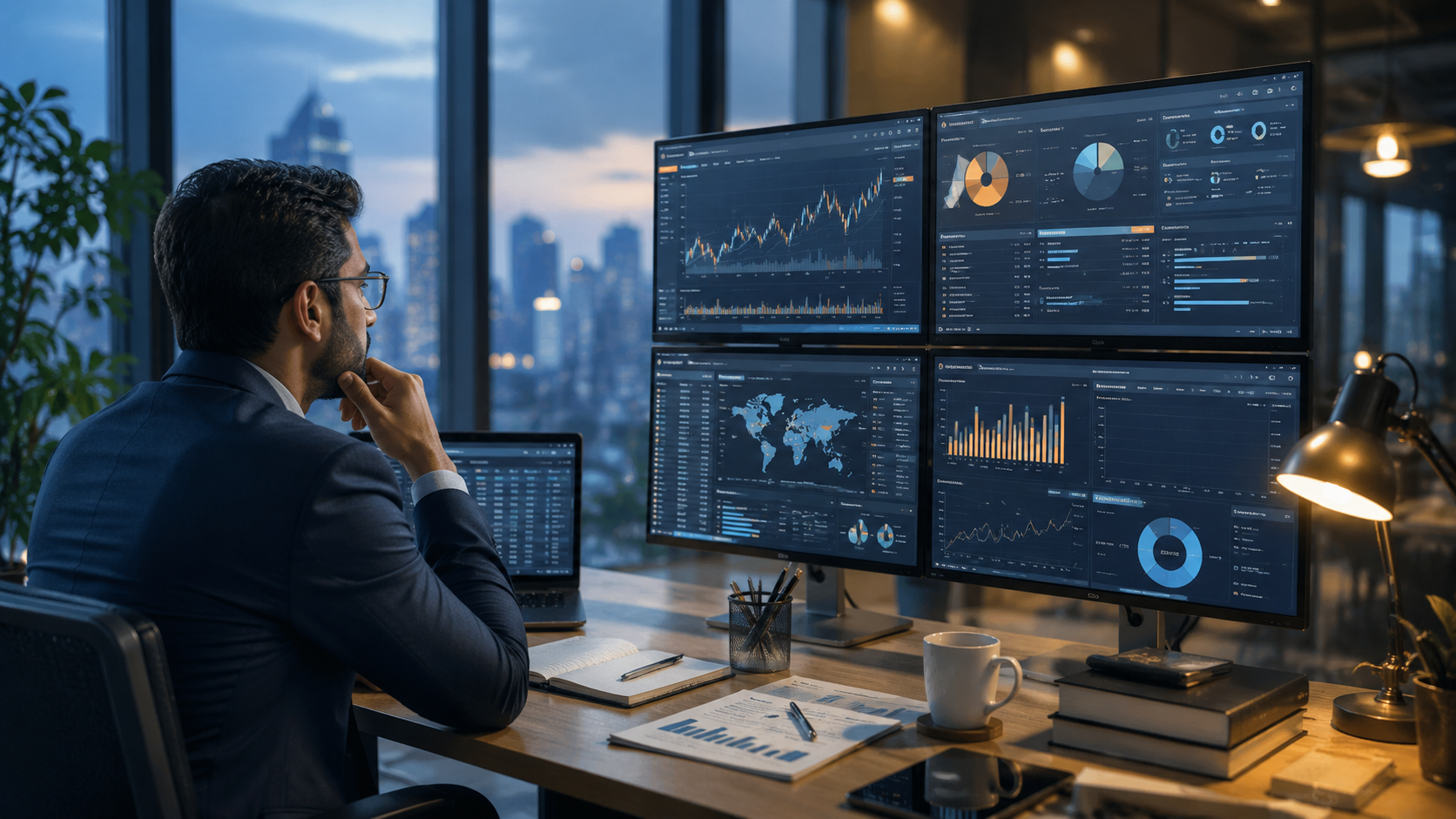
Benjamin Graham, the man who taught Warren Buffett everything he knew about investing, once said that in the short run the market is a voting machine, but in the long run it is a weighing machine. In other words, prices don’t always reflect reality — at least not right away. In the short term, they reflect how people feel.
And feelings, as any trader will tell you, are complicated.
Why Sentiment Matters More Than Most People Admit
When Silicon Valley Bank collapsed in 2023, something interesting happened. Regional banks with completely sound balance sheets — nothing wrong with their fundamentals, no exposure to the same problems — saw their stock prices fall sharply anyway. The fear that swept through the banking sector didn’t wait for analysis. Investors went into “sell first, ask questions later” mode, and the contagion spread.
That’s market sentiment in action. It doesn’t always follow logic, and it doesn’t always follow the numbers. But it moves prices, and that makes it something every trader needs to understand.
The flip side of the same coin is NVIDIA. Yes, the company has delivered exceptional earnings growth — the fundamentals are real. But the sheer scale of its stock price run-up has been driven by something more than revenue figures. It’s been driven by a wave of optimism about AI’s role in reshaping the global economy. Sentiment amplified the fundamentals and took the price to heights that earnings alone couldn’t fully justify.
Understanding this dynamic — the gap between what a company is worth and what the market feels it is worth — is what separates good traders from reactive ones.
The Problem: Sentiment Is Hard to Measure
Here’s the challenge. Reading market sentiment isn’t like reading a balance sheet. There’s no single number to look up.
To get a genuine read on how the market is feeling about an asset, a sector, or the broader economy, you’d need to work through news articles, analyst reports, earnings call transcripts, economic data releases, social media conversations, discussion forums, and investor commentary — across multiple sources, across multiple time zones, in real time. Even then, two experienced traders could look at the same information and come away with completely different conclusions about whether sentiment is bullish, bearish, or somewhere in between.
Add to that the sheer speed at which sentiment can shift. A single tweet, a surprise central bank announcement, or an unexpected earnings miss can flip market mood in minutes. By the time a trader has finished a careful manual review of the available information, the window they were analyzing for may already have closed.
This isn’t a minor inconvenience. It’s a structural disadvantage that affects every trader who relies on manual sentiment research.
How AI Is Solving the Problem
This is where artificial intelligence is starting to genuinely change the game for traders — not as a buzzword, but as a practical tool that addresses each of the specific challenges above.
Processing at scale. AI models can use natural language processing to read and analyze millions of data points simultaneously — news articles, social media posts, earnings call transcripts, analyst reports — in seconds rather than hours. What would take a team of analysts days to work through, an AI sentiment tool can process in a single afternoon trading session.
Source quality filtering. Raw volume of information isn’t the same as useful information. AI tools can be trained to prioritize high-quality, relevant sources and filter out noise, so the sentiment signals they surface are based on the right inputs rather than the loudest ones.
Real-time updates. Because AI can process data continuously, sentiment readings can be refreshed multiple times throughout the trading day. Rather than working from a morning analysis that becomes stale by noon, traders can access sentiment data that reflects what’s happening right now.
Objective summarization. One of the most underrated capabilities of AI in this context is its ability to synthesize. Rather than leaving traders to draw their own conclusions from a mountain of raw data, AI sentiment tools can provide a clear, objective summary of what the aggregate signal actually means — bullish, bearish, shifting, or uncertain.
Platforms like IUX24 are already building this capability into their trading tools, with AI sentiment features that track global market mood in real time and surface actionable signals for traders.
How Smart Traders Are Using Sentiment Data
Access to better sentiment data is only valuable if you know what to do with it. Here’s how experienced traders are actually putting it to work.
Confirming trends. Most traders identify their market view through technical analysis — price action, volume, chart patterns. Sentiment data adds a second layer of confirmation. If your chart says bullish and sentiment data says bullish, the conviction behind a trade increases significantly.
Catching reversals early. Price and volume data often lag behind shifts in sentiment. That means a chart can still be trending upward while the underlying sentiment is already turning negative — a warning sign that the move may be losing steam. Sentiment data can surface this divergence before it shows up in price, giving traders a meaningful head start.
Trading around news events. For traders who take positions around regulatory announcements, earnings releases, or macroeconomic data, real-time sentiment shifts can signal which direction short-term volatility is likely to move — often faster than price action itself.
Risk management. When fear is dominating the market, the appropriate response isn’t always to hold positions and hope. Sentiment data can give traders the signal they need to reduce leverage, tighten stop-loss levels, hedge existing positions, or rotate into defensive assets before the broader market reaction fully plays out.
Contrarian plays. Some of the best trades come from recognizing when the market’s emotional reaction to an event has gone too far in one direction. When euphoria has pushed an asset well beyond its fundamental value, or when fear has caused an oversold situation in a fundamentally sound company, sentiment data can help identify the setup before the inevitable correction.
The Bigger Picture
As global markets become more connected, events in one part of the world create ripples across assets everywhere else — often faster than any individual trader can manually track. The ability to accurately read market mood in real time is becoming less of an edge and more of a baseline requirement for traders who want to compete.
AI-powered sentiment tools are making that capability accessible to a much wider range of traders than it has ever been before. Not as a replacement for analytical judgment, but as the kind of research infrastructure that used to be available only to the largest institutional players.
The market is still, ultimately, a weighing machine. But in the short run, knowing how the crowd is voting — and how quickly that vote is changing — is as valuable as any fundamental analysis you can do.









Leave a Reply